
Table of contents
In harmony with nature: The transformative power of the annual cycle festivals throughout the year
Honouring the magic of nature: the significance and power of the annual cycle festivals
Discover the significance of the annual cycle festivals for different cultures and traditions
The seasons in the annual cycle
The role of the annual cycle festivals in modern spirituality
An overview of the annual cycle festivals
Meditation on the annual cycle festivals: Feeling the power
Immerse yourself in the fascinating world of the annual cycle and discover the magic behind the eight annual cycle festivals! Find out more about the significance of these festivals in different cultures and traditions, and learn how you can integrate them into your modern life to foster your spiritual growth. Join us on a journey through the annual cycle and experience the transformative power of nature and the circle of life.
In harmony with nature: The transformative power of the annual cycle festivals throughout the year
The festivals of the annual cycle offer a unique opportunity to live in harmony with the natural rhythms of nature. These rituals help you to become aware of the quality of time and the gifts that nature and life hold in store for us, and to use them for your personal development. The wheel of the year, or annual cycle, takes us on a mystical, fascinating journey, the stages of which are the annual cycle festivals. Each festival marks the beginning of a new phase.
The symbol of the wheel of the year illustrates the law of transformation to which our lives are subject, and which states that every ending also holds a new beginning. This journey reacquaints us with the wisdom of life, with its capacity for change and the natural cycle of the seasons and their symbolic significance. The origins of these festive days lie in the harmonious changing of the seasons and in the movements of the sun and the moon.
The four solar festivals in the annual cycle:
1. Winter solstice/Yule
2. Spring equinox/Ostara
3. Summer solstice
4. Autumnal equinox/Harvest festival
The four lunar festivals fall between these festive days:
1. Candlemas/Imbolc
2. Walpurgis Night/Beltane
3. Harvest festival/Lammas/Lugnasad
4. All Souls’ Day/Samhain
Annual cycle festivals were part of Central European culture long before Christianisation. In the following descriptions, we begin with the lunar festival of Samhain on 31 October, which marks the start of the dark season. It is at once an attunement to and a preparation for the quality of time of the Raunächte, and thus – together with the Raunächte themselves – forms a link to the other annual cycle festivals throughout the year.
You can celebrate this time in a very special way with the help of meditations, rituals and incense blends, and discover and nurture different facets of your personality. Make the most of these moments and consciously journey through your life in harmony with nature.
Honouring the magic of nature: the significance and power of the annual cycle festivals
The annual cycle is a cyclical concept that celebrates the natural changes of the seasons and the events associated with them. These festivals are often observed by spiritual and religious communities and offer an opportunity to connect with nature and honour its powers.
The annual cycle festivals offer an opportunity to honour nature and connect with it. Many people use these festivals to strengthen their spirituality and deepen their connection to the earth. They can also be used as an opportunity to perform rituals and ceremonies to attract good fortune and success, or to honour nature and celebrate its beauty.
Discover the significance of the annual cycle festivals for different cultures and traditions
The annual cycle refers to the recurring cycle of the seasons and the phases of the sun and moon, which is celebrated in many cultures and traditions around the world. The significance of the annual cycle varies depending on culture and tradition, but it is generally seen as a symbol of the cycle of life, death and rebirth. By observing and celebrating the annual cycle, we can connect with the natural rhythms and cycles of nature and foster our spiritual growth.
In many indigenous cultures, the annual cycle is celebrated with ceremonies and rites that honour the relationship between humankind and nature. In ancient Greece, the seasons were associated with the goddesses Demeter (autumn and winter) and Persephone (spring and summer). In Christianity, important events in the life of Jesus are celebrated in connection with the annual cycle, such as Christmas (winter) and Easter (spring).
The annual cycle is also an important component of many newer spiritual traditions, such as the Wiccan religion and neo-pagan paganism. In these traditions, the annual cycle is celebrated with eight annual cycle festivals, which take place in harmony with the phases of the sun and moon. These festivals represent the transition between the seasons and often have a deep symbolic meaning aimed at spiritual growth and personal transformation.
In many indigenous cultures, annual cycle festivals are used to honour the relationship between humans and nature. These festivals often relate to the agricultural cycle and celebrate the harvest or the growth of plants and animals. One example of this is the Thanksgiving festival, which is celebrated in North America.
In ancient Greece, the seasons were associated with the goddesses Demeter (autumn and winter) and Persephone (spring and summer). The Festival of the Eleusinian Mysteries was celebrated in honour of these goddesses and symbolised the death and rebirth of nature.
In Christianity, important events in the life of Jesus are celebrated in connection with the annual cycle, such as Christmas (winter) and Easter (spring). These festivals also have deep spiritual meanings, which focus on rebirth and the renewal of faith.
In modern spirituality, festivals marking the annual cycle are often celebrated by Wiccan practitioners and other neo-pagan traditions. These festivals relate to the solar and lunar cycles and symbolise the transition between the seasons. Rituals and ceremonies are often performed to strengthen the spiritual connection to nature and the elements.
Overall, the festivals of the annual cycle offer an opportunity to connect with nature and the natural rhythms of life. They can be used to strengthen our connection with nature, foster spiritual growth and celebrate the beauty and abundance of life.
The seasons in the annual cycle
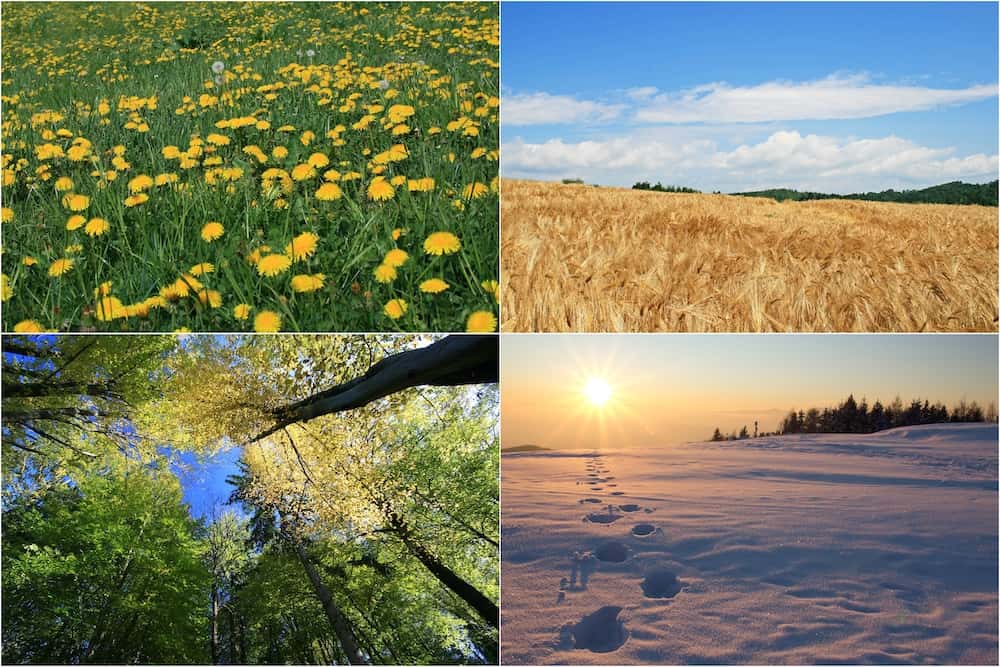
The annual cycle is a cycle comprising the four seasons: spring, summer, autumn and winter. This cycle has always been an important part of the human experience and has given rise to various cultural practices and celebrations. The four seasons represent the course of nature and have a strong influence on human life and survival.
The festivals of the annual cycle are rituals celebrated at specific times throughout the year to honour nature and the changes that occur as the seasons pass. These festivals may vary depending on culture and tradition, but they all have one thing in common: they mark the transition from one season to the next and are often celebrated with specific symbols, dances and songs.
In spring, many cultures celebrate the festival of rebirth or fertility. This festival symbolises nature’s awakening from hibernation and the beginning of the life cycle. Typical rituals include planting seeds, lighting fires and exchanging flowers.
In summer, the festival of abundance or the harvest is often celebrated. This festival symbolises the peak of the life cycle and the start of the harvest season. Typical rituals include harvesting grain, singing harvest songs and sharing a meal of fresh produce.
In autumn, the festival of transition or death is often celebrated. This festival symbolises a farewell to the abundance of summer and the transition to the colder season. Typical rituals include burning straw dolls or collecting autumn leaves.
In winter, the festival of darkness or new beginnings is often celebrated. This festival symbolises the start of winter and the return of light. Typical rituals include lighting candles, singing Christmas carols and exchanging presents.
Overall, the festivals of the annual cycle hold deep spiritual and cultural significance for many people around the world. They help us to connect with nature and the cycle of life, and to strengthen our connection to the world around us.
The role of the annual cycle festivals in modern spirituality
Annual cycle festivals play an important role in modern spirituality, as they can help us connect with nature and our inner selves. By celebrating these annual cycle festivals, we can strengthen our connection to nature and expand our awareness of the natural rhythms and cycles of life.
The annual cycle festivals can also help to foster our spiritual development, as they give us the opportunity to explore our connection to nature and our own inner strengths. The rituals and ceremonies performed during the annual cycle festivals can help us to focus on our intentions, visualise our goals and deepen our spiritual practices.
Furthermore, annual cycle festivals can also help to strengthen our relationship with nature and other living beings. By connecting with nature and expressing our gratitude for the beauty and abundance of life, we can increase our compassion and mindfulness towards others.
In modern spirituality, annual cycle festivals are often celebrated by people who seek a connection with nature and who are committed to preserving the planet and its natural resources. By celebrating these festivals, we can also help to recognise our responsibility as stewards of nature and life on this planet.
Overall, annual cycle festivals can help to connect us with our environment and our inner selves, whilst helping us to develop a deeper connection with nature and other living beings. They offer us the opportunity to explore and deepen our spirituality, express our gratitude and strengthen our connection with nature.
An overview of the annual cycle festivals
These festivals honour the natural rhythms and cycles of life. Here is an overview of these festivals, which can help us connect with nature and our inner selves, and foster our spiritual growth. For each festival, you’ll find a link to the relevant article on the annual cycle festivals, featuring rituals and fascinating insights.
Samhain, the gateway to healing our roots and making a fresh start
Samhain, the festival of the dead, which takes place between 31 October and 1 November, is an important festival in the Celtic calendar, said to symbolise the end of summer and the beginning of darkness. It is a festival that marks the start of the new year, just like our New Year celebrations. It is a time when we can reflect on all that we have achieved over the past year and look forward to the possibilities that the future will bring.
It is darkness with which everything begins. It is a time of tranquillity and reflection, a transition between life and death. It is the time when the realm of the living and that of the dead converge, and therefore it is a time of divination, prayer and communication with the ancestors.
Read more > Samhain: The transition from light to darkness and the connection with our ancestors
Winter solstice – Yule: The gateway to light and wisdom
Yule, also known as the winter solstice, is celebrated on 21 December and is a time of joy and rebirth. During this time, we remember the sun, which slowly rises again after the darkness of Samhain, which marks the end of the cycle. Yule is therefore regarded as the beginning of a new cycle and is often compared to the Christian festival of Christmas. Darkness reaches its peak and seems to have triumphed, but is then replaced by light, which slowly gains the upper hand.
Yule is a time to celebrate the slow and gradual rebirth of the sun and to give thanks for the light that is gradually being restored. It is a time to celebrate the hope of a new cycle and to enjoy the joy and warmth of the season.
Read more > Winter solstice – Yule: The return of the light and the celebration of a new beginning
Imbolc – Candlemas: The gateway to fertility and light
The plant associated with Imbolc, a pagan festival marking the beginning of spring, is the mistletoe. It is a symbol of life, as its white berries resemble male sperm and remind people of the cycle of life and the hope for new beginnings. By focusing on the light and nature’s promise of a fresh start, people can use this time to look forward to the new season and the new opportunities it will bring.
Its awakening is just a short time away. On this day, the Celts celebrated the start of the year with a lunar festival known as Imbolc. To mark this special occasion, bonfires were lit, symbolising the positive rather than the destructive aspect of fire. The goddess honoured on this day was Brigid, the goddess of the triple fire, who was later Christianised as Saint Brigid.
At Imbolc, we can take a step back and reflect on our behaviour and attitude over the past period.
Read more > Imbolc – The time of growth and fertility in the annual cycle
Ostara – the spring equinox: The gateway to creativity and new beginnings
Oestara, the spring equinox, takes place on 21 March, a day when light and darkness are in perfect harmony. On this day, nature is in full bloom and we can feel the spirit of spring in the air. It is the ideal time to break free from the limits we have imposed on ourselves and open ourselves up to new possibilities; a chance to experience rebirth and welcome a new beginning.

Read more > Ostara – The magic of spring and the return of light
Walpurgis Night – Beltane: The gateway to vitality and joie de vivre
Beltaine/Beltane, celebrated on 1 May, is a festival that invites us to connect with the natural world and free ourselves from the things that no longer serve us. It is a time when we can recognise the power of light and revel in its splendour.
This festival reminds us that the light of life is always there, even in the darkest moments. It is a time when we express our joy and gratitude for the beauty and abundance that surrounds us. Beltaine/Beltane is an invitation to open our hearts and minds to the gifts of the season.
Read more > Beltane: Celebrating spring and the life-giving energies of the annual cycle
Summer solstice: The gateway to the power of manifestation and creative wisdom
This festival of the sun takes place on the longest day and shortest night of the year and celebrates the full blossoming of light and fertility. It is a time of joy, light, fire and gratitude. In this triumph of light, the Earth Goddess, who is invited to this festival with gratitude, is pregnant and symbolises the ripening of the fruits.
The quality of this time invites us to live our life force with devotion and to flourish in a courageous and creative way.
Read more > Summer solstice – The gateway to abundance and the realisation of inner potential within the annual cycle
Lugnasad – Lammas: The gateway to gratitude and a new vision
Lugnasad, also known as Lammas, is the annual festival celebrated on the eve of 1 August. It is dedicated to Lugh, the Celtic god of light and the sun. Lugnasad is the opposite pole to the Festival of Light (Imbolc) in February. During this festival, the ripe fruits are harvested and prepared for the winter.
The first grain harvest (barley and wheat) also takes place. Accordingly, the abundance of summer, the ripening of the fruit and the harvest season are celebrated. For our ancestors, this time was characterised by great expectations and joys, but also by fears surrounding the harvest, which provided security for the cold winter days.
This phase represents a turning point, symbolising the bridge between the souls of the seeds and the harvest of the fully ripened fruits.

Read more > Lugnasad – Connecting with the Earth and its gifts: A celebration of the harvest and prosperity
Mabon – Autumnal equinox: The gateway to autumn and to introspection within the annual cycle
People celebrate Mabon, the autumnal equinox on 22 September, in a variety of ways. Dancing, playing games and lighting bonfires are all traditional activities that take place at this time. This is the moment when darkness slowly replaces the light and the days grow shorter.
At this moment, light and darkness are in perfect harmony and the annual cycle is drawing to a close. It is the time of the second harvest, the last of the year. The swan is the symbol of this autumnal equinox. It represents a soul that is immortal and can therefore serve as a guide in the afterlife. On a personal level, we are encouraged to look within ourselves to find a balance between the conflicting forces of light and darkness.
Read more > Mabon – Celebrating the harvest and gratitude in the annual cycle
Meditation on the annual cycle festivals: Feeling the power
The annual cycle meditation is a wonderful opportunity to connect with the natural rhythms and cycles of life and to nurture our spiritual development.
Duration
Approx. 10 to 15 minutes
Preparation
To practise this meditation, you will need a quiet place where you can sit undisturbed. Create an atmosphere of connection and mindfulness by decorating the room with symbols and objects associated with the relevant festival in the annual cycle. Light a candle and settle into a comfortable position.
Procedure
Begin by closing your eyes and taking deep breaths in and out to relax. Imagine that you are standing in the centre of a circle made up of leaves, flowers or other natural materials associated with the relevant annual cycle festival. Focus on the qualities and energies of the festival in question and absorb them. Feel these energies flowing through your body and mind, bringing you into harmony with the natural rhythms and cycles of life.
Visualise how you send your intentions and wishes out into the circle and connect them with the energies of the festival. Take your time and linger for a while in this state of connection, whilst taking in everything you are experiencing and feeling.
When you are ready, give thanks for the experiences and energies you have received, and slowly open your eyes. Take your time to come out of the meditation and readjust to your surroundings. Take a deep breath in and out, and carry the sense of connection with the natural rhythms and cycles of life with you into your everyday life.
The annual cycle meditation is a powerful way to foster our spiritual development and connect with the natural cycles of life. Make it a regular part of your practice to experience a deeper connection with nature and your inner self.
I hope this article has inspired you to explore the annual cycle festivals and deepen your connection with nature. We have learnt how these festivals are celebrated in different cultures and what significance they hold for our spiritual development.
I’d be delighted if you could share this article with others who are also interested in the annual cycle festivals.
I’d also like to invite you to share your thoughts and experiences in the comments below. We can learn from one another and inspire each other by sharing our experiences.
With best regards,
Ernestina Mazza
Leave a Reply