
Aspen helps you to strengthen your basic trust and inner harmony.
In this blog post, you’ll find out everything you need to know about Aspen!
Table of contents
The Bach flower Aspen: the flower of trust and harmony
The Bach flower Aspen: The plant
How does the Bach flower Aspen work?
The Bach flower Aspen in a balanced state
Further aspects of the Aspen personality
The Bach flower Aspen as an emotional state (mood)
Reaction patterns of a person in a disharmonious Aspen state
Moods and symptoms of the Aspen personality
Typical statements of the Aspen personality
Physical aspects in which Aspen is induced
Psychological aspects in which Aspen is induced
The positive potential of Aspen
Harmonisation of the Aspen state
Bach flower Aspen for children
Differences and similarities when compared with other Bach flowers
Common combinations of Aspen with other Bach flowers
The credo of the Aspen personality
Positive affirmations for the Aspen personality
The Bach flower Aspen: the flower of trust and harmony
“Vague fears of unknown things that cannot be justified or explained.
In this case, the patient may be afraid that something terrible will happen, without knowing what that might be.
These vague, inexplicable fears can haunt him day and night.
Those who suffer in this way are often afraid to talk about their difficulties.”[1]
The Bach flower Aspen: The plant
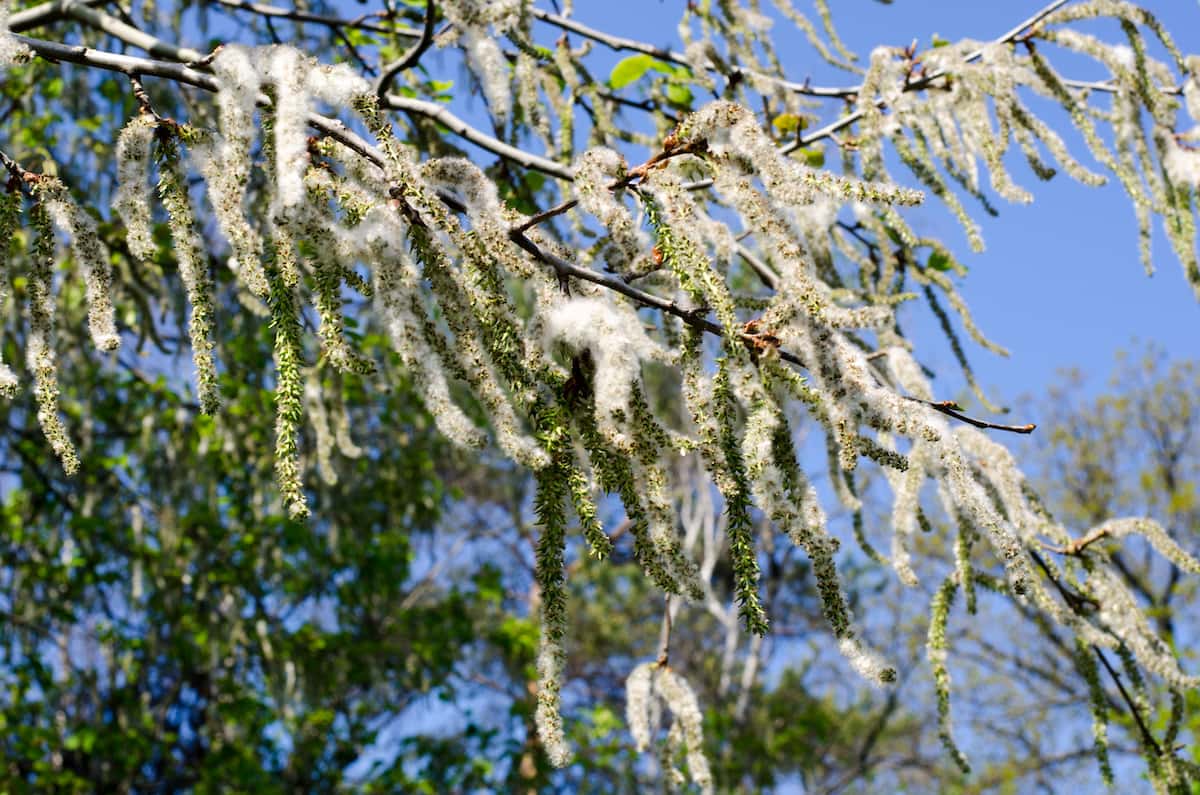
The aspen (Populus tremula) is a tree belonging to the Salicaceae family, i.e. the willow family. It grows to a height of 20 to 25 metres and is characterised by a slender trunk and a rounded crown. The aspen’s flowers are oval and pointed, whilst the leaves are rounded.
The slightly flattened leaf stalk makes the leaves particularly flexible, so that they sway in the wind at the slightest breeze. The name of this tall, slender tree is derived from this characteristic: at first glance, its leaves seem to tremble in an almost inexplicable way.

How does the Bach flower Aspen work?
The Bach flower Aspen is indicated when a person is plagued by fears whose origin is unknown and which are beyond their personal understanding. The flower remedy immediately stops the fantasies generated by the anxiety and calms the person by instilling optimism and making them realise that the anxiety was merely a figment of their imagination. Furthermore, should a similar state recur, the person will understand what to do: I must stop listening to or reading negative news!
The Bach flower Aspen in a balanced state
In a balanced Aspen state, the person remains in their own centre and feels centred and clear-headed. Aspen helps one to rest within oneself and to go through life with inner peace and self-confidence, inspiring others with one’s own serenity and warmth.
The Aspen character
The Aspen personality is very sensitive, delicate and vulnerable. The essence tells us in particular of a strong and vague fear that characterises the person affected. Of all the Bach flowers, Aspen is the one that most clearly describes a form of fear that makes one tremble – like aspen leaves.
Aspen fears are “unknown”, without a specific cause, elusive and inexplicable. They are so intrusive and omnipresent that they create an atmosphere of anxiety about omens, threats and events that are as terrifying as they are mysterious.
Understanding the cycle of fear
Where does this cycle of fear stem from and how does it work? A key factor is that the Aspen type is indeed more sensitive and receptive to vibrations and energies than others. They feel themselves more strongly and have a deep, inexplicable connection with the whole. Consequently, they also pick up on a range of emotions and sensations that come from all around – including from those around them.
The Aspen type is a sort of magnet, capable of absorbing and sensing the surrounding energy field more intensely. The problem is that they cannot defend themselves against these perceptions and experience them unfiltered and as if they were their own – as if they were missing a layer of skin. Negative energies from outside, in particular, can become a major burden. As a result, other people’s problems or illnesses are perceived as their own.
Triggers of the fears associated with Aspen
However, it is not necessarily the case that the triggers for anxiety are events that occur in the real world: Even “bad” news on the radio, in newspapers or online is enough to trigger a tendency towards precognition – or a premonition of terrible events – and thus set the spiral of fear in motion.
A typical pattern is that disturbing thoughts pop into the mind at the most unexpected moments, particularly when one is relaxed, and, fuelled by these people’s vivid imaginations, lead to catastrophic thoughts. Many of the things they fear are the product of their imagination. Children’s fear of ghosts is a typical example of the Aspen type’s mindset. Under these circumstances, those affected soon find themselves living in constant fear that something terrible might happen.
Aspen as an expression of fear of the unknown
This fear fluctuates between the inexplicable and the specific, and can relate to a wide variety of scenarios: a possible earthquake, loss of consciousness or sensation, death, an incurable illness, being robbed whilst asleep or suffering violence. Aspen embodies the fear of everything that cannot be grasped in concrete terms, a fear that surfaces particularly when reflecting on topics such as religion and death. Aspen types dwell on these matters a great deal, thereby intensifying their fears.
In the ultra-negative Aspen state, one soon feels unsafe anywhere and therefore remains confined to a few places, such as one’s own home and workplace. The fear is active round the clock and feeds the imagination of those affected to such an extent that they tend to become superstitious and rely on figures such as fortune-tellers, magicians or priests, because they believe these are the only ones who can free them from their negativity.
The origin of Aspen fear
One possible cause of these exaggerated reactions may be that the person concerned experienced highly intense events at a time when they were completely unable to react.
The only solution was to remain helpless, fearful and passive. This experience may have been something so powerful that one was unable to cope with it. As a result, it has remained bound in the unconscious. An example that comes close to such a phenomenon is Grof’s perinatal matrices[2] and the pain that some children experience whilst still in their mother’s womb.
“We could define Aspen as the mother of all fears, because it represents the oldest and most archetypal of all fears. It may therefore be the case that all other fears within the system are linked to it, or that they crystallise into this unresolved primal fear.”[3]
Further aspects of the Aspen personality
“Those affected are often afraid to share their worries with others,” commented Bach in his remarks on the Aspen personality. Another characteristic of this flower is therefore not only to suffer from fear, but also to accept it silently. These people generally come across as unapproachable and reserved, which in turn is linked to another fear: that of the possible consequences of liberating communication – both for themselves and for others.
To escape the fear of the unknown and the invisible, a person in the Aspen state must orient themselves towards physical reality, just as someone who wakes from a nightmare must re-establish contact with the meaning of their earthly existence.
The Bach flower Aspen as an emotional state (mood)
Everyone is capable of experiencing a heightened state of sensitivity in which all sensory perceptions are intensified. Those who are accustomed to this heightened state may find the transition pleasant, whilst those who are not accustomed to it may find it more difficult to cope with, as they are unprepared for this way of perceiving reality. Being drawn to the occult is a common phenomenon and can be alleviated with the Aspen essence.

Aspen is a suitable essence for children and adults who, for example, are afraid of the dark, as well as for people who are approaching the end of their lives and struggling with a fear of the unknown. It can be a great help in calming oneself down and enabling one to navigate one’s emotions without feeling overwhelmed. Furthermore, Aspen can help those going through a period of extreme sensitivity, as it can reduce the intensity of emotions and provide a sense of comfort and security.
Reaction patterns of a person in a disharmonious Aspen state
People in a disharmonious Aspen state
- suffer from unfounded feelings of fear and danger
- suffer from sudden bouts of anxiety, both when alone and in company
- suffer from paranoia and are afraid of an invisible power or force
- frequently have nightmares (wake up with a feeling of panic and are afraid to fall asleep again)
- are “afraid of being afraid”, but lack the courage to talk about it
- experience collective fears (e.g. fear of physical violence or robbery, rape, abuse, snakes, ghosts and the like)
- immediately notice the first symptoms when the newspaper reports on an impending flu epidemic
- feel as though they are “bewitched”
- often no longer know what is fantasy and what is reality
- have a superstitious fascination with occult phenomena
- have a desire to isolate themselves better or at least to develop a thicker skin
- are often children who, because of a fear of monsters or terrifying creatures, do not want to be alone or sleep in the dark
- are unable to resist the atmosphere of certain places
- sometimes adopt an attitude of generalised self-sacrifice, which constantly drives them to demand a great deal without ever feeling obliged to give anything in return
- are hypersensitive to other people’s emotional states and easily influenced by external stimuli
- feel that they have never really been loved, which forms the basis for a persistent victim mentality
Moods and symptoms of the Aspen personality
- Fear of the dark
- Fear as anticipation
- Fear of anticipation
- Fear of invisible forces, of magic, etc.
- Vague, undefined and unfounded fear
- Fear of aggression
- sudden bouts of anxiety
Typical statements of the Aspen personality
- I’m afraid I’m going to have an accident.
- I’m afraid of the future.
- I’m worried I’ll be robbed.
- I’m afraid of going out on my own.
- I’m afraid to go to sleep.
- I feel scared when I’m home on my own.
- I have a serious illness; I can feel it.
- I’m terribly scared and I don’t understand why.
- I have to sleep with the light on.
- I’m afraid of fainting.
- I’m afraid of being afraid.
- I feel restless in certain places.
- I feel dizzy when I leave the house.
- When I’m on holiday, I always book hotels near a hospital.
- Mummy, the dolls move at night – I’m scared.
- Be careful with the car – the engine might explode.
- Let’s get out of here – this storm could bring everything crashing down.
Physical aspects in which Aspen is induced
- Sleepwalking
- mental or physical trembling
- Feeling of suffocation or shortness of breath
- Anxiety, shortness of breath or dyspnoea
- Nausea
- Heart palpitations
- Sweating, hot flushes
- Trembling
- Chills
- Fainting
- Subjective dizziness
- Instability in space
- Fear of dying or going mad
- Dissociation
Psychological aspects in which Aspen is induced
- Excessive vigilance
- Anticipatory anxiety
- Inner trembling
- Restlessness, insecurity
- Heightened intensity of perception
- Hypersensitivity
- lack of self-control
- Paranoia
- Fickleness caused by severe insecurity
- heightened sensitivity
- agonising anticipation of something happening
- unharmonised mediumistic abilities
- Catastrophising
- a strong connection to the astral and dream realms
- Inability to filter one’s own emotions
- Inability to rationalise one’s fear
The positive potential of Aspen
- Excellent perceptiveness
- Sensitivity and the ability to use it constructively
- Courage to forge ahead with confidence
- Ability to connect with more subtle levels of perception and establish complex mediumistic relationships
Harmonisation of the Aspen state
Aspen puts a stop to the fantasies generated by fear and calms the person by instilling optimism and helping them realise that the fear was merely a figment of the mind. It grounds the person so that they can build their dreams day by day. It sweeps away the fear of the unknown and of that which eludes rational understanding.
On the one hand, Aspen helps one to feel more grounded in reality, thereby providing less fertile ground for mysterious fears. On the other hand, it helps one to accept one’s own sensitive nature, thereby overcoming deep-seated fears and opening oneself up to faith and spirituality. Accepting and appreciating this personality’s unusual perceptive abilities ensures that a broader and more confident understanding of the world can take root.
Bach flower Aspen for animals
The Aspen flower is indicated for animals that are anxious for unknown reasons. Their vague anxiety manifests without cause and occurs suddenly. On a physical level, this leads to a state of rigidity. These animals’ fears, which are literally ingrained in their bones, may be innate, stem from the prenatal phase or have arisen from negative experiences. Accompanying physical symptoms include, for example, nervousness, vomiting, diarrhoea or even urinary incontinence.
In some cases, fear in Aspen types also manifests itself during sleep: dogs and horses, in particular, often startle easily. Due to their feelings of fear, these characters find it very difficult to be alone. They are also afraid of strangers and are sensitive to noise. As a result of all this, Aspen animals are generally restless, easily startled and hypersensitive.
Bach flower Aspen for children
Aspen is an invaluable aid for coping with the phases of growth and development in childhood that are associated with the onset of fears. An example of this would be the fear of strangers, which typically arises around the eighth month of life. Aspen is also very effective for more complex fears, such as the fear of the dark, of monsters, of illness, of thieves, of death or of the future.
Furthermore, Aspen is particularly useful for children who are very sensitive and who often perceive the atmosphere of a place or the moods of those around them very intensely. By using Aspen, children can cope better with these fears and learn to manage their feelings in a healthy and constructive way.
Aspen for thin skin
It is said that people who respond to Aspen were born with one less layer of skin. This distinctive feature is said to make them feel unprotected and vulnerable.
Aspen works very quickly and is known for imparting a deep sense of security and protection from the outside world. It has been used for centuries to support those affected, and its effects can be felt almost immediately. Anyone taking this remedy may feel more self-assured and secure in their own skin, knowing that they have something to help protect them from the outside world.
Differences and similarities when compared with other Bach flowers
The anxiety experienced by Aspen is entirely different from that of Mimulus. People in a Mimulus state suffer from clearly recognisable fears and remain silent about their suffering as a result of a rational decision. External intervention is regarded as useless or even counterproductive. Furthermore, Mimulus does not wish to be pitied.
Aspen, on the other hand, is afraid to open up to others because of the possible – threatening – consequences. Aspen is confronted with a personal fantasy world which – unexplored and inexpressible – is perceived as unpredictable.
Mimulus therefore approaches fear in a logical and objective manner, whilst Aspen experiences a predominantly psychological state of fear without any cognitive processing of emotions. It is precisely this state that keeps the Aspen personality trapped within themselves.
Like the Aspen type, the Red Chestnut type is also plagued by anticipatory anxiety and perceives signs of impending adversity. However, the specific focus here becomes clear: the misfortunes they fear relate to loved ones.
Finally, unlike Cherry Plum – which fears losing control and often falls victim to agitation – Aspen allows itself to be “wrapped up” and coexists without reacting to its painful state of mind. It may even regard it as inevitable and tolerate it.
If the unease caused by Aspen’s inexplicable fears fosters a certain inclination to live in a state of floating, projected into the future and liberated from present-day reality, the association with Clematis is appropriate. If, on the other hand, a veiled and tormenting restlessness sets in, Agrimony is the flower of choice.
Common combinations of Aspen with other Bach flowers
For those experiencing anxiety caused by repression: Agrimony with Aspen
For those who experience sudden bouts of anxiety that could lead to a mental breakdown:
Cherry Plum with Aspen
For those experiencing very intense fear:
Mimulus with Aspen
For those suffering from depression with worries:
Mustard with Aspen
For those who have general concerns due to anxiety:
Red Chestnut with Aspen
For those who suffer from panic attacks:
Rock Rose with Aspen
For those who suffer from anxiety-driven self-harm:
Rock Water with Aspen
For those who find themselves unable to make decisions due to anxiety:
Scleranthus with Aspen
For those who are vulnerable due to an anxious way of life or a fear of life caused by psychological trauma:
Star of Bethlehem with Aspen
For those who struggle to connect with others due to their insecurity:
Water Violet with Aspen
For those who suffer from a mental block caused by vague worries:
White Chestnut with Aspen
The credo of the Aspen personality
“I am at the mercy of life. I must be prepared for the worst!”
Positive affirmations for the Aspen personality
- I am in control of my life.
- I am open to change.
- I trust myself and the course of life.
- I feel secure in my own strength
I would like to thank you from the bottom of my heart for taking the time to read this article. If you have any further questions or would like to share something with us, we’d love to hear from you in the comments.
Do you think this article could help others too? Then feel free to share it on social media or online.
Bibliography
Bach, Eduard (2000): Heile Dich selbst: die geistige Grundlage der Original-Bach-Blütentherapie. Munich: Hugendubel.
Krämer, Dieter (2017): Neue Therapien mit Bach-Blüten 1: Die sanfte Heilmethode effektiver angewandt über die zwölf Schienen. Bad Camberg: Isotrop Verlag.
Krämer, Dieter (2017): Neue Therapien mit Bach-Blüten 2: Die sanfte Heilmethode effektiver angewandt über die zwölf Schienen. Bad Camberg: Isotrop Verlag.
Orozco, Ricardo/Rodríguez, Boris C. (2007): Intelligenza emozionale e fiori di Bach. Tipi di personalità nella psicologia contemporanea. Moriondo Torinese: Centro Benessere Psicofisico.
Orozco, Ricardo (2009): Fiori di Bach. 38 descrizioni dinamiche. Moriondo Torinese: Centro Benessere Psicofisico.
Orozco, Ricardo. (2017). FLORES DE BACH Patrón Transpersonal® y aplicaciones locales Territorios tipológicos. Barcelona: El Grano de Mostaza Ediciones
Scheffer, Mechthild (2015): Die Original Bachblütentherapie: Das gesamte theoretische und praktische Bachblüten-Wissen. 2nd edition. Munich: Irisiana Verlag.
Scheffer, Mechthild (2020): Die Original Bachblütentherapie für Einsteiger: Die Blüten – Die Anwendung – Die Wirkung. 6th edition. Munich: Irisiana Verlag.
List of sources
- Bach, Dr. Edward / Petersen, Jens-Erik R. (1988): Heile dich selbst mit den Bach-Blüten. Place: Knaur Verlag, p. 107. ↑
- According to Stanislav Grof, perinatal experiences refer to the experiences of the foetus in the womb as well as during the clinical phases of labour and birth. ↑
- Orozco, Ricardo (2017): Flores de Bach. Patrón Transpersonal® y aplicaciones locales Territorios tipológicos. Barcelona: El Grano de Mostaza Ediciones, p. 59. ↑
Leave a Reply